
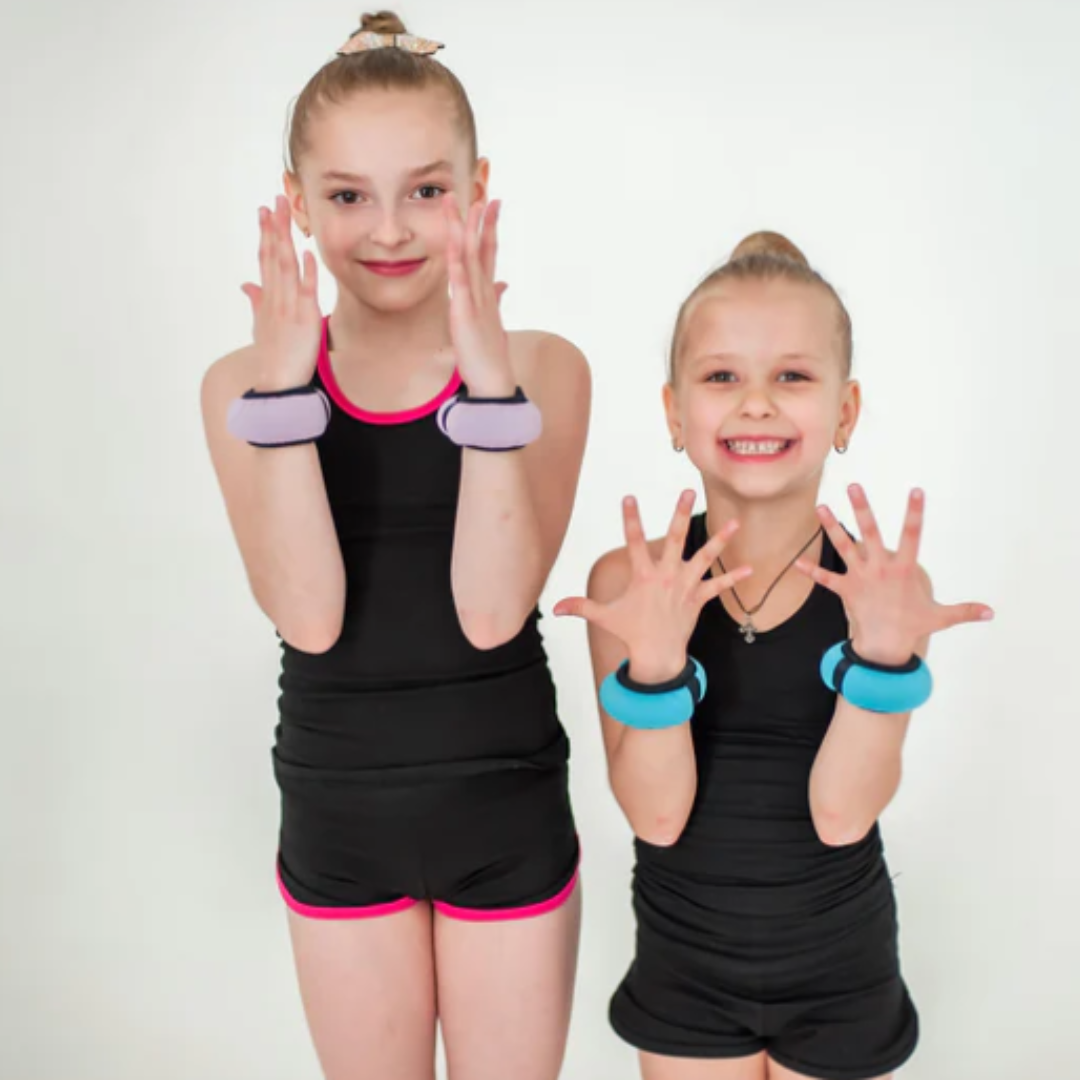
The Importance of Weights in Rhythmic Gymnastics
- What are weights?
- The Role of Weights in Rhythmic Gymnastics Training
- The Best INDIGO Weight Models
- Conclusion
What are weights?
Weights are items of load that can be incorporated to improve performance in Rhythmic Gymnastics. These weights can be ankle or wrist bands designed to add extra resistance to training, giving more control and increasing endurance. The main aim is to strengthen the muscles and help prevent injuries, and when used correctly they are also a very effective way to build strength.
The Role of Weights in Rhythmic Gymnastics Training
Rhythmic Gymnastics is a unique discipline that combines flexibility, harmony and balance; to perform complex movements, gymnasts need training that includes physical strengthening. Strength is a key element in the technical development of this sport, as without a solid base of strength and endurance it becomes much harder to master advanced movements and perform routines.
When we talk about strength, we don't just mean visible muscle strength, but also the control and endurance needed to move the apparatus with precision. Rhythmic gymnasts, therefore, even if it is not as visible as in other disciplines, have an enormous physical capacity that allows them to excel.
Working with weights has a significant impact on training, as this additional load integrates perfectly with other exercises and with a well-designed programme created by coaches. This develops and strengthens the core, improving the gymnasts' performance.
Weights are also ideal for working on specific areas of the body that need to be stronger to perform certain exercises. For example, wrist and ankle weights can help improve stability and control in movements involving the apparatus, such as the hoop or the ribbon.
It is essential to always use the correct weight, as too much weight can not only affect the exercises but also increase the risk of injury. Weights, therefore, should be adapted according to age, level and skill to ensure an appropriate load. In addition, the use of weights should be balanced with flexibility, mobility and stretching exercises to avoid muscle stiffness.
It is recommended to perform sets of exercises with weights to get the most out of them. If you train with a lighter weight, you can do more repetitions and, conversely, if you increase the weight, you reduce the number of repetitions.
The Best INDIGO Weight Models
At Indigo, we understand that every gymnast has specific needs when it comes to training and physical development. That is why we offer a wide variety of weights in different loads, designed to suit all types of needs and training levels.
We have options with different loads, allowing each athlete to adapt their training to their goals and abilities, always ensuring gradual and safe progress. Below we present a selection of weight models to help you choose the best option:
Weighted Neoprene Bracelets with Metal Shot Filling INDIGO
If you want to strengthen your arm and wrist joints, bracelets are without a doubt your ideal option. They add extra load without hindering movement, and their design makes them quick to put on and take off. They are definitely one of the favourite models among the youngest gymnasts.

Available in the following weights: 0.1 kg, 0.2 kg, 0.3 kg, 0.4 kg.
INDIGO Neoprene Wrist and Ankle Weights
This option is for gymnasts who want weights for both arms and legs, or at least the ability to combine them. Velcro closures hold wrists and ankles securely, and the product stands out for its soft, durable material. These weights are definitely one of our best sellers, as they are an excellent aid for strength training.

Available in the following weights: 0.2 kg, 0.3 kg, 0.4 kg, 0.5 kg, 0.7 kg.
INDIGO ACTIVE Silicone Weights
This model has perhaps the most original design, as the bracelet is made up of eight pieces that can be adjusted as you wish if you want a lighter training load, which makes them especially versatile. They can also be used for both wrists and ankles, making them a perfect accessory for any activity or sport.


Available in the following weights: 0.25 kg, 0.45 kg.
INDIGO CROSS Wrist and Ankle Weights
These weights have a firm Velcro closure that fits comfortably around wrists and ankles. A special feature is their non-slip surface filled with metal pellets.

Available in the following weights: 0.5 kg, 1 kg.
INDIGO Classic Weights
Finally, we present this classic model, whose polyester material ensures durability and a water-resistant surface, making it suitable for aquatic training.

Available in the following weights: 0.2 kg, 0.3 kg, 0.5 kg, 0.7 kg.
Conclusion
Using weights in rhythmic gymnastics is an effective tool that helps improve strength, coordination and technique. Although it is not an essential component, if used appropriately, it is an excellent way for gymnasts to increase their performance. Using weights and working in endurance sets should be progressively integrated into the training plan, without losing sight of the importance of exercises specific to rhythmic gymnastics.
In short, a gymnast must have a solid foundation of strength, control and endurance to successfully perform the most difficult and complex exercises. Only with proper planning, comprehensive physical training and constant work on technique can the demanding level of this discipline be reached.
We've put together a super complete video by womanpersonaltrainers in which she performs a routine of several exercises with repetitions using the weight of our Indigo Active articulated weights.


