
- 1. Basic clothing
- 2. Introductory apparatus (by season and level)
- 3. Supplementary training equipment
- 4. Tips for choosing the right equipment
- 5. What's used in rhythmic gymnastics: apparatus and equipment at a glance
- 6. Rhythmic gymnastics equipment: what goes in the bag and what stays on the carpet
- 7. Frequently asked questions
- 8. Conclusion
Starting a new rhythmic gymnastics season is always exciting, especially if you have just taken up this wonderful sport. Rhythmic gymnastics combines elegance, strength, flexibility and coordination, and as in any discipline, having the right equipment is essential for learning safely and enjoying it from day one. If you are just starting out or looking for what you need to get equipped, this guide will give you a clear, practical overview of the essentials. We will also show you where to find quality products for this new stage of learning.

1. Basic clothing
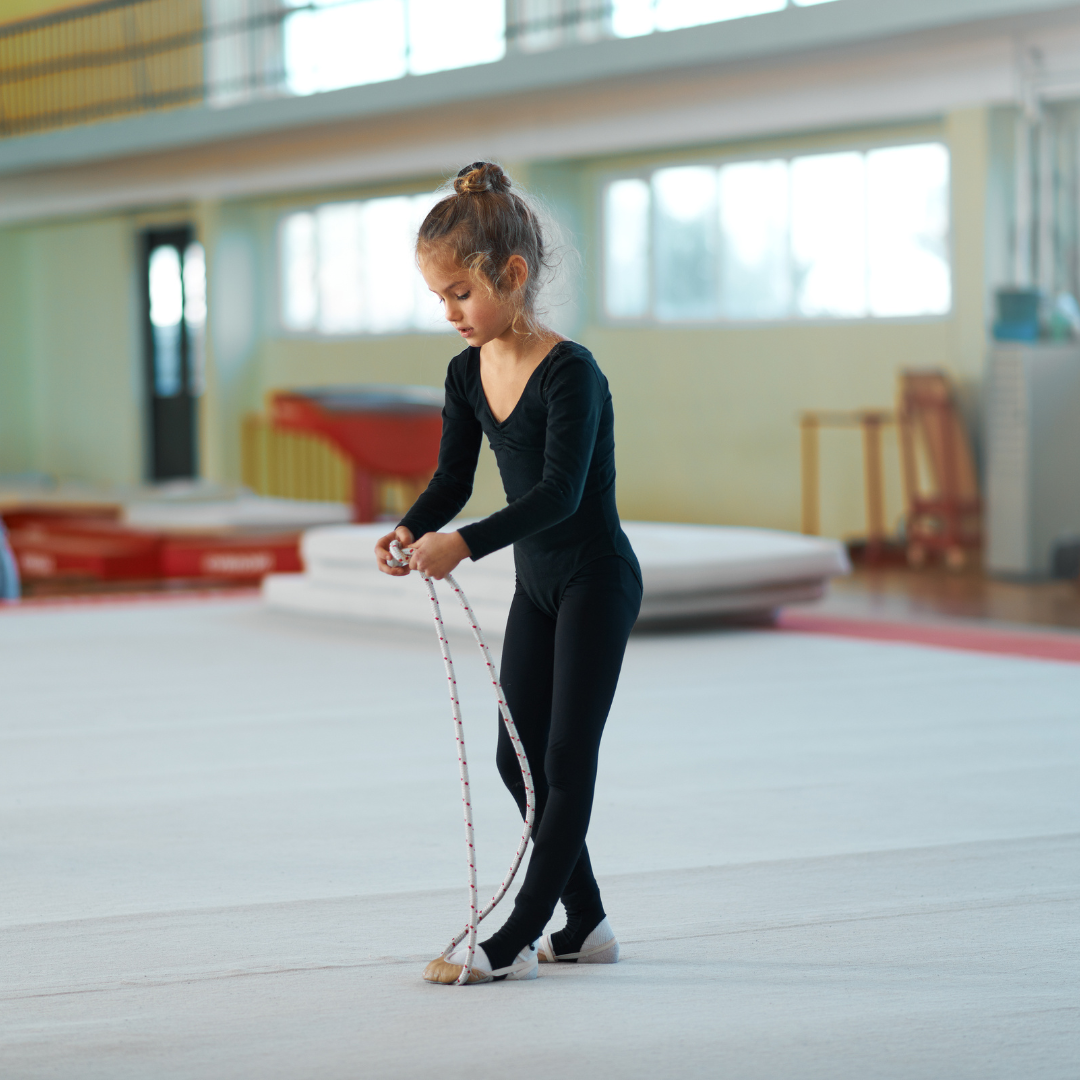
Although many schools or clubs do not require a compulsory uniform when you first start, it is advisable to have suitable training clothes that are comfortable, stretchy and fit well to the body, allowing complete freedom of movement. The most common choices are a bodysuit, leotards, or fitted sportswear sets, as they make it easier to perform exercises and allow the coach to see the gymnast's posture and technique clearly.
However, the essential item from day one is toe shoes (also known as half shoes or sock-style half shoes). They protect the sole of the foot from direct friction with the carpet, help with movement across the floor, and are essential for performing turns and footwork with greater precision and fluidity. They also help prevent blisters and minor injuries during training. We also recommend using a toe shoe bag from day one, as it is one of the accessories that wears out most with daily use. Keeping them well protected not only helps keep them clean and in good condition, but also significantly extends their lifespan.

2. Introductory apparatus (by season and level)
One of the most distinctive features of rhythmic gymnastics is its apparatus. However, not all of them are used from the start, and gymnasts do not train with the same ones every year. The choice usually depends on several factors:
- The gymnast's age and level
- The criteria of the club or coach
- In Spain, the rules set by the RFEG (Real Federación Española de Gimnasia, the Spanish Royal Gymnastics Federation), which specify which apparatus is worked each season in the different categories. Categories, age groups and rules vary from country to country, so please check with your national gymnastics federation.
The apparatus most commonly used at the base levels are: rope, hoop, ball, ribbon and clubs. Others are introduced later, as the gymnast develops coordination, strength and body control.

3. Supplementary training equipment
1. Rhythmic gymnastics bag
Having a bag or backpack designed specifically for rhythmic gymnastics is a practical and long-lasting investment from the start. These bags are designed to carry all the apparatus and personal equipment safely, neatly and protected, which is key both in training and in competitions. Unlike an ordinary backpack, bags made for rhythmic gymnastics include special compartments for hoops, balls, ribbons or clubs, which prevents them from being bent or damaged through use. They also offer enough space for toe shoes, leotard, towel, water bottle and other accessories, so that everything doesn't end up in a jumble. Investing in one at the start not only guarantees order and comfort, but also reflects a commitment to continuing in the sport: a good bag can last for years. And by encouraging gymnasts to carry and look after their own equipment, you also build their independence and responsibility, both on and off the carpet.

2. Accessories for flexibility and strength
In rhythmic gymnastics, physical preparation off the carpet is just as important as work with the apparatus. That is why more and more clubs and coaches include specific flexibility, strength and joint mobility routines as part of daily training. There are many useful accessories that help you train safely and effectively. Some of our recommendations are:
- Resistance bands: ideal for assisted, progressive stretching, especially for the legs and back. They help improve range of motion and are key in preparing for jumps, balances and pivots.

- Foam rollers: self-massage tools that help relax muscles, release tight areas after training and prevent overload or minor injuries. They are perfect for both warm-ups and recovery.

- Yoga blocks: widely used in active flexibility exercises, especially for working on hip opening, back extension or alignment in technical positions. They also help maintain correct posture during stretching.

Including this kind of equipment in a gymnast's routine, even at beginner levels, not only improves performance but also helps build a solid, lasting physical base, which is essential for progressing in this discipline.
3. Knee pads
Although not compulsory, knee pads are a highly recommended accessory, especially during the introductory stage. In the first few months, gymnasts perform many floor exercises, such as footwork, supports and transitions, which can cause discomfort or minor knocks to the knees. Wearing knee pads helps cushion the impact and protect the joint, making practice safer and more comfortable from the start.

4. Apparatus covers and protection
Dedicated covers for hoops, balls or ribbons help protect the apparatus from dust, moisture, knocks or deformation, which is essential if they are transported often or stored at home. Many covers are also designed with secure fastenings and lightweight materials, making them easy to use every day. There are also options with multiple compartments that let you carry several apparatus in one bag, making transport easier.

4. Tips for choosing the right equipment
- Check with your coach or club before buying: each school has its own requirements.
- If you are just starting, look for durable, resistant materials suited to the gymnast's age.
- Make sure the equipment is good quality, especially if it will be used in competitions.
- Don't buy everything at once. It's better to add equipment as you progress, so you can move forward step by step and build confidence.
5. What's used in rhythmic gymnastics: apparatus and equipment at a glance
If you are looking for a quick list of the objects used in this discipline, here are the apparatus we mentioned earlier and what each one contributes to the gymnast's work:
| Apparatus | Main focus |
|---|---|
| Rope | Jumps, coordination and rhythm |
| Hoop | Rotations, throws and passing through the hoop |
| Ball | Rolls, bounces and hand control |
| Ribbon | Shapes drawn in the air and fluid movement |
| Clubs | Coordination between both arms and throws |
Remember that they are not all used at once or from the very first day. You can see the options available in our rhythmic gymnastics apparatus section, but before choosing, ask your coach which apparatus you will be working on this season.
6. Rhythmic gymnastics equipment: what goes in the bag and what stays on the carpet
To avoid getting lost among so many items, it helps to separate your equipment into groups:
- Personal: leotard or fitted clothing, toe shoes and knee pads if you need them.
- Apparatus: whatever your club specifies for your level.
- Transport and care: bag, apparatus covers and toe shoe bags.
- Physical preparation: resistance bands, foam roller and yoga blocks.
If you're unsure what to pack in your bag, this article explains what no gymnast's bag should be without. Start with the basics and add the rest little by little.
7. Frequently asked questions
What equipment do I need to start rhythmic gymnastics?
The essentials from day one are toe shoes and comfortable, fitted clothing, such as a leotard or a sportswear set. Apparatus, a bag and other accessories can wait. The best approach is to ask your club or coach what they require in each case.
What are the rhythmic gymnastics apparatus?
The most common are rope, hoop, ball, ribbon and clubs. They are not all worked on at the same time: each season, gymnasts train with different ones depending on their level and the criteria of the club or coach.
Do I need to buy all the apparatus when I start?
No. The most practical approach is to buy only the apparatus you will use at that time and add the rest when your coach indicates. This way you avoid unnecessary costs and can choose each item more wisely as you advance.
What goes in a rhythmic gymnastics bag?
As well as the apparatus needed for that day, it's worth bringing toe shoes, a leotard, a towel and a water bottle. A bag with dedicated compartments keeps everything in its place and stops hoops, balls or ribbons from being bent or damaged during transport.
8. Conclusion
Having the right equipment from the start makes a real difference. It not only helps you progress technically, but also strengthens your motivation and commitment to the sport. Are you ready to begin your journey in rhythmic gymnastics?
👉 Discover everything you need in our shop and take your first steps with protection, style and confidence.

