
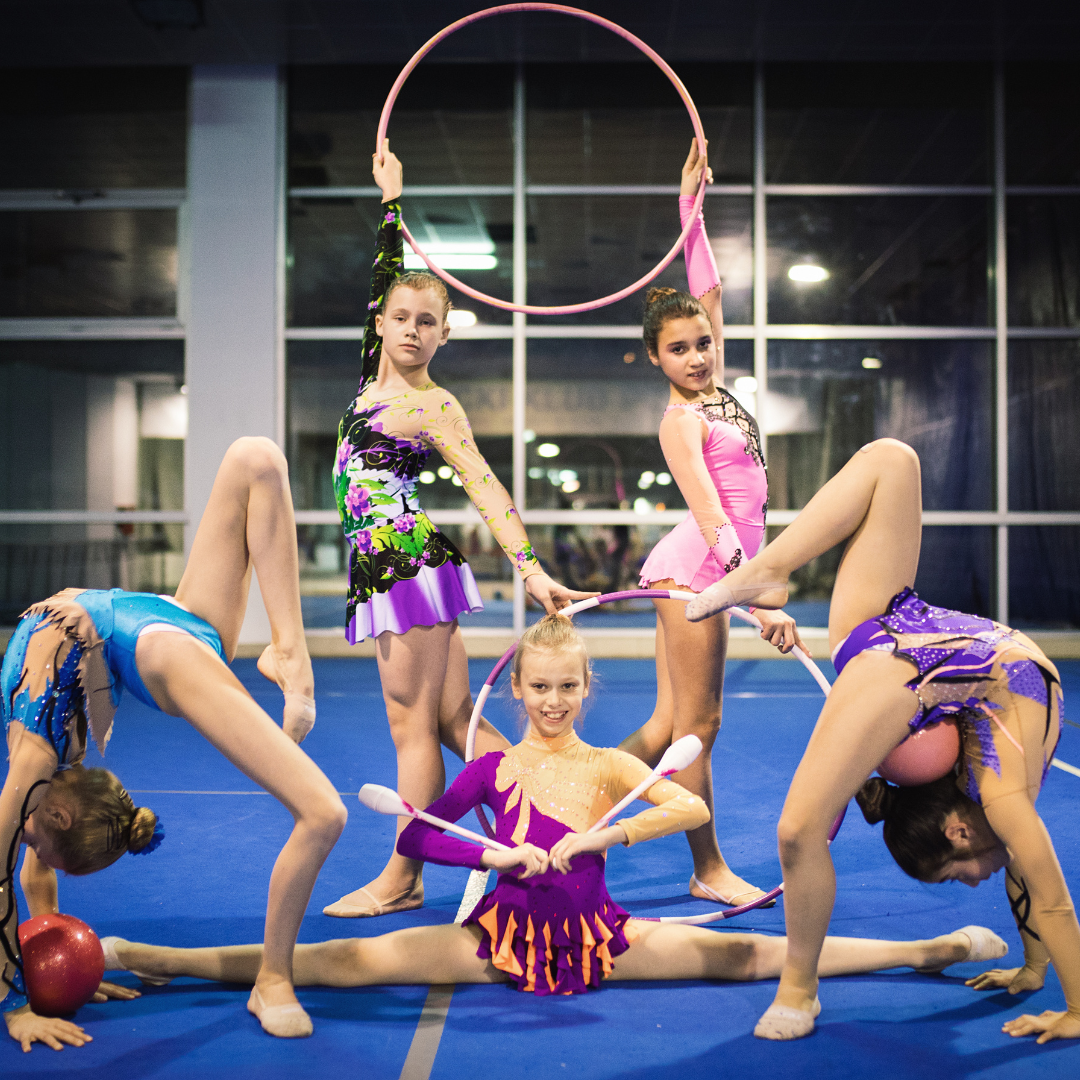
Rhythmic gymnastics is a sport that is as aesthetic as it is complex. To the untrained eye, it can look like a magical choreography that combines acrobatics, dance and music. However, behind every routine lies demanding training and a rigorous evaluation based on clearly defined technical and artistic criteria. In this article, we explain in simple terms how rhythmic gymnastics exercises are scored, both in the individual and group categories.

1. Why is scoring so hard to understand?
Unlike other sports with clear objectives, such as athletics or swimming, rhythmic gymnastics has no stopwatch and no extra points for speed. The score depends on the judgement of a panel of specialist judges who assess difficulty, technique and artistic expression. There is therefore a set of rules, updated every Olympic cycle: the FIG Code of Points, drawn up by the International Gymnastics Federation (FIG), which sets out the guidelines judges use to score routines.
2. Judging panels: who scores what?
To make the evaluation as objective and complete as possible, each rhythmic gymnastics routine is analysed by two independent judging panels, each responsible for assessing a specific dimension of the exercise.
Difficulty Judges (D)
This group of judges focuses on the technical complexity of the routine. They evaluate all the elements the gymnast attempts to perform: jumps, turns, balances, throws, catches and apparatus manipulations. The more daring and well-combined the movements, the higher the score that can be earned in this section. There is no upper limit on the difficulty score, which allows gymnasts to aim for exceptional marks if they perform highly advanced elements without errors.
Execution Jury (E)
These judges analyse each movement in detail to spot technical or form faults: falls, loss of balance, extra steps, poor catches, incorrect lines or dropped apparatus. They also assess the quality, cleanliness and stability of static and dynamic elements. Every detail counts, and so does every mistake.
Currently, according to the FIG Code of Points 2022–2024 (still in force in 2025), this section also takes into account the artistic side of the exercises, such as choreographic composition, music choice, use of space, fluidity between movements, and how well the character of the exercise matches the musical interpretation. Rhythmic gymnastics is, in many ways, a form of performance art, so judges also value how the gymnast moves the audience, tells a story or conveys emotion through her performance.
3. What is scored in a routine?
a) Difficulty (D)
Starts at 0 and adds points for each technical element included and performed correctly.
In the individual category:

- Body difficulties (DB): jumps, turns and balances.
- Rhythmic or dance steps (S): must last at least 8 seconds and show variety.
- Risk and dynamic elements with rotation (R): throwing the apparatus while the gymnast turns.
- Apparatus handling (DA): technique in handling the apparatus during the routine.
In the group category:

- All of the above, plus:
- Exchanges (ED): throws between teammates, with different catches.
- Collaborations (C): cooperative group work with one or more apparatuses.
b) Execution (E)
Starts at 10 points and deductions are subtracted for each technical error:
- Dropping the apparatus or the gymnast falling.
- Poor catches.
- Unnecessary movements across the floor.
- Imprecise apparatus handling.
- Loss of synchronisation (in groups)
4. Possible Penalties
In addition to technical and artistic errors, there are automatic penalties for breaking certain rules, such as:
- Finishing out of time.
- The apparatus or the gymnast leaving the carpet.
- Stopping without justification.
- Communicating with coaches or teammates.
- Inappropriate attire.
These penalties are applied in addition, deducted directly from the total final score, on top of the execution deductions.
5. How is the final score calculated?
Individual category:
- Difficulty (D): All valid elements are added together, and there is no maximum limit on points
- Execution (E): Starts at 10 points and deductions are subtracted for technical or artistic errors.
The final score is the sum of both parts (D+E).
Group category:
- Difficulty (D): all valid difficulties are added together. There is no preset maximum.
- Execution (E): Starts at 10 and deductions are subtracted.
The final score has no maximum limit.
7. Did you know...?
- Each apparatus has specific technical requirements that must be met.
- Errors can be penalised with deductions ranging from -0.05 to -0.70 points or more, depending on severity.
- Judges also face very demanding preparation, with strict training courses and exams to keep their accreditation.
- The scoring system changes every Olympic cycle.
- Inappropriate clothing is also penalised.
- The carpet measures 13x13 meters, and going even slightly outside it results in a penalty.
Conclusion
Rhythmic gymnastics is a fusion of technique and art, and its scoring system reflects that duality. Although it may seem complex at first, understanding the judges' criteria helps you enjoy every routine much more. Now that you know how it is scored, you'll watch this sport with new eyes!

