
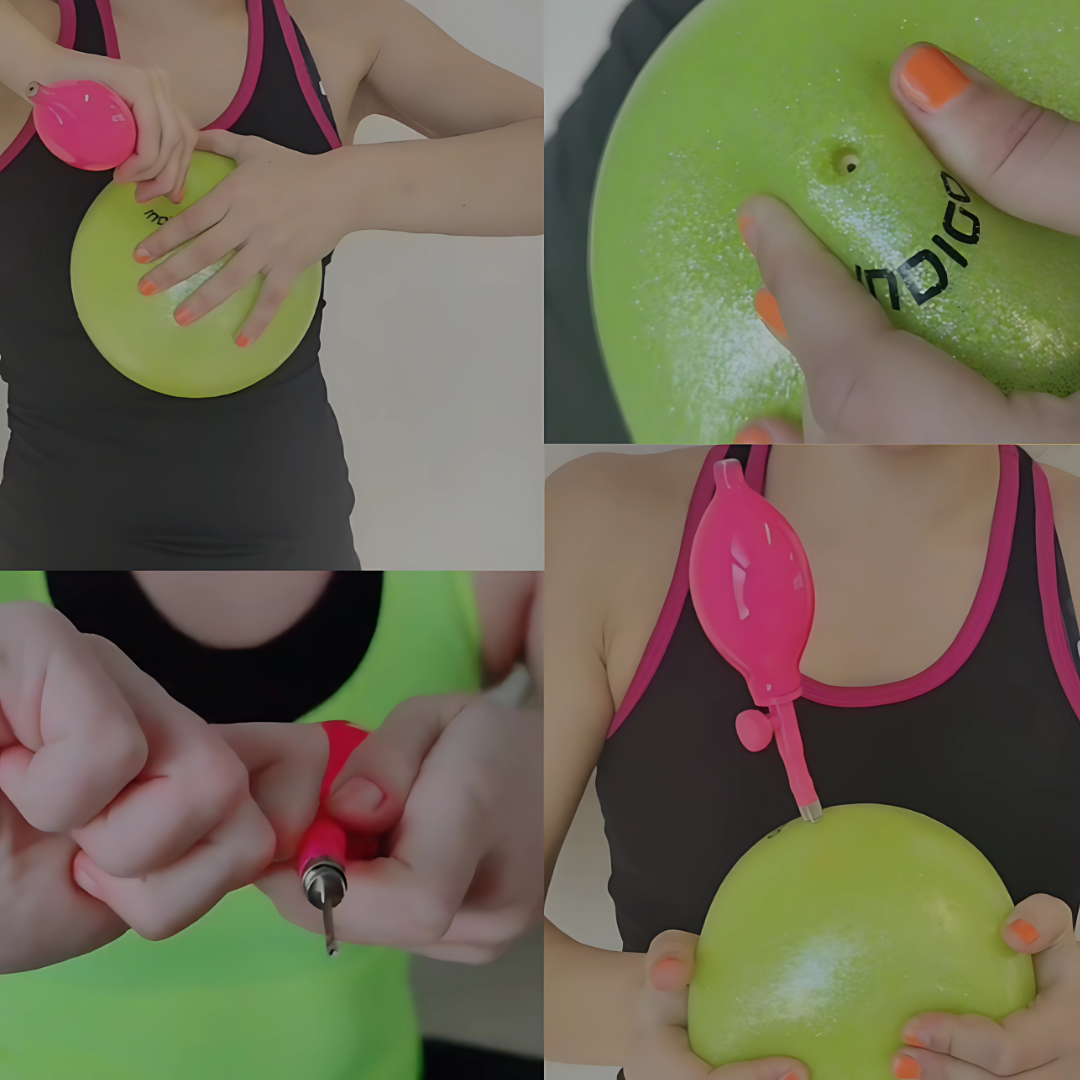
How to Deflate Your Rhythmic Gymnastics Ball
Balls for rhythmic gymnastics are one of the special apparatuses in this discipline and are used both for training and in competitions. Sometimes it is necessary to adjust their pressure, either because they have lost air over time and use, or because we have overinflated them to get a perfectly round shape. In this blog, we will focus specifically on how to quickly and easily deflate your rhythmic gymnastics ball.
1. Preparation: What Do You Need?
Ball Inflator: We always recommend keeping a ball inflator for rhythmic gymnastics on hand, as it is an indispensable accessory for any gymnast. It is a compact accessory you can include in your competition bag, since you never know when you might need it.

Locate the ball valve: This step may seem unnecessary, but it is really essential. It is vital to locate the inflation valve before you begin.
2. Simple Guide to Deflating the Ball
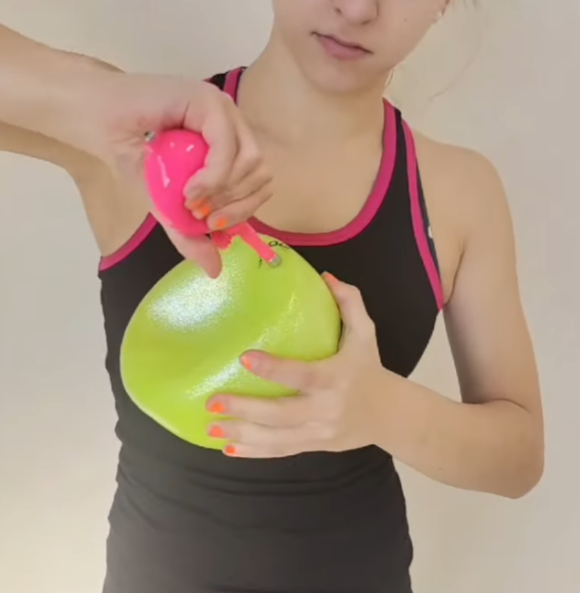
- Insert the needle into the valve: Do this step gently and without forcing the needle. We recommend holding the needle firmly to make sure no air escapes.
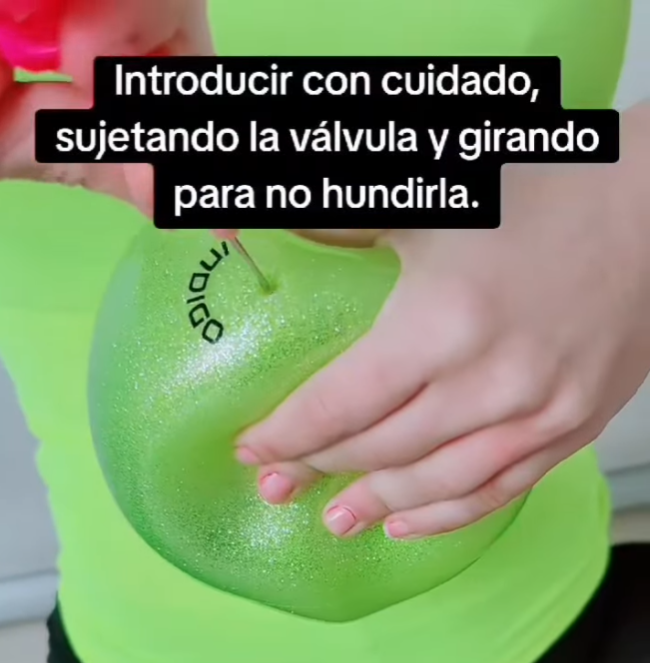
- Open the dial so the air comes out: Slowly open the valve to allow air to escape from the ball. 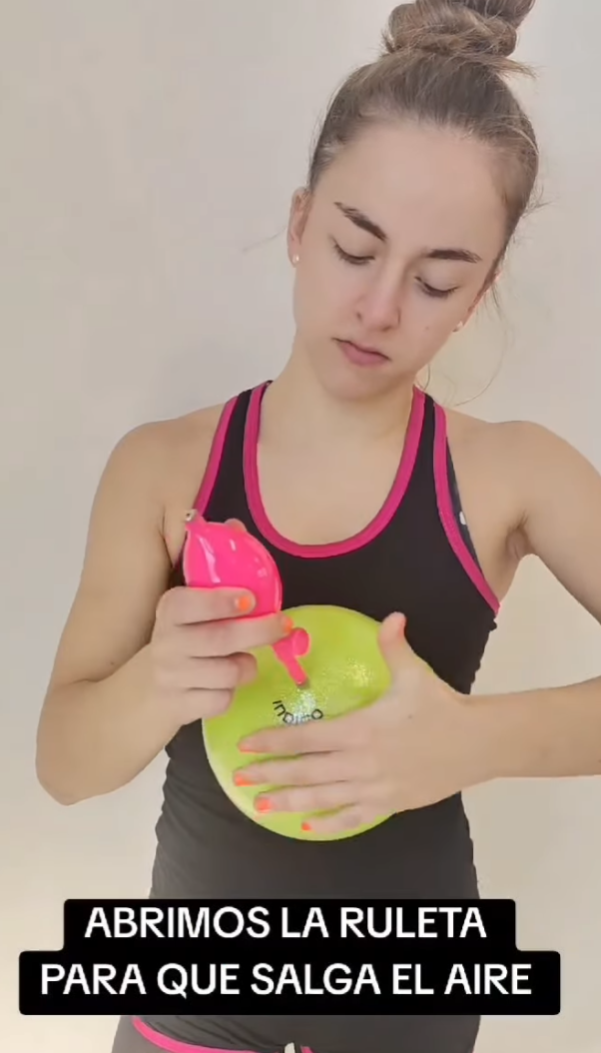
- Apply pressure to the ball to speed up the process; do it carefully so you can measure well until it feels just right to you.
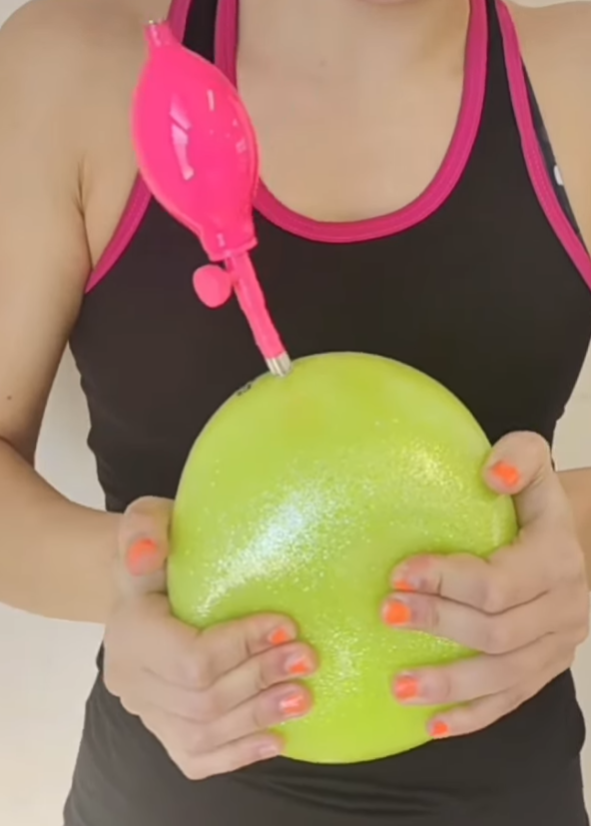
- Check the ball's pressure
- Carefully remove the needle
- Test the ball, this way you can make sure it is the most suitable pressure for you and for doing your exercises comfortably.
3. How to Inflate a Rhythmic Gymnastics Ball
If when testing it you realise you have deflated it too much, don't worry, you can always fix it. The most important thing is for the ball to be in perfect condition for each gymnast.
Fully close the dial on the Ball Inflator: This will let you push air into the ball instead of letting air out.
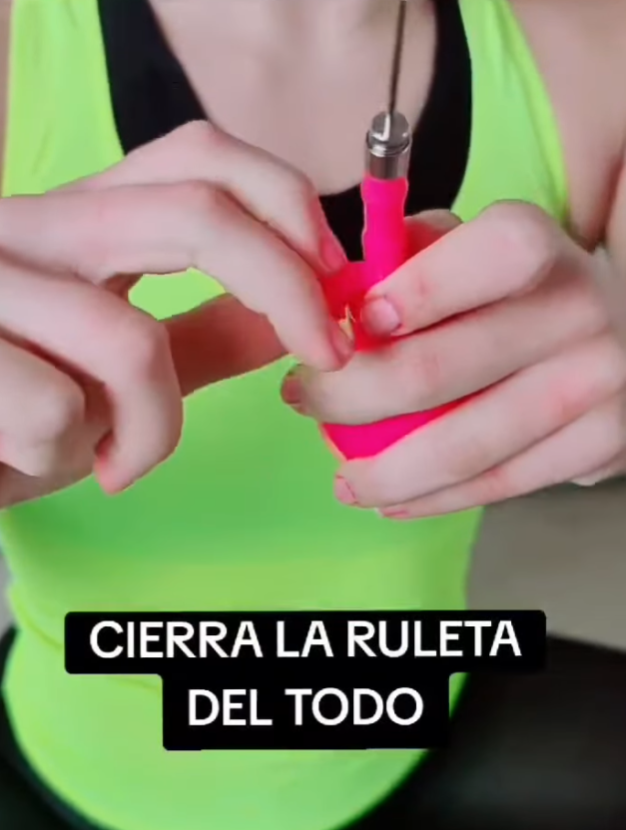
Start inflating the ball: Follow the same process but now with the aim of adding air to the ball until you reach the desired pressure.
How to Deflate a Ball Without a Needle, Without a Nozzle or Without a Visible Valve
The needle is the most convenient and safest option, but you don't always have one to hand. If you've run out, there are alternatives, as long as you use them sensibly and without forcing the valve.
Without a needle
Once you have located the valve, you can open a small air passage with a thin, smooth object with a rounded tip. Insert it without pressing too hard and squeeze the ball with your other hand so the air escapes slowly. Don't use anything sharp or pointed: a scratched or deformed valve starts losing air when it shouldn't, and repairing it is difficult.
If your ball is for rhythmic gymnastics, it is best to wait until you have a needle. It is a delicate material, and a damaged valve shortens the life of the apparatus.
Without a nozzle
Some balls have a small cap or spout instead of an inflation nozzle. In that case, open or remove the cap and press the ball with both hands, gently and evenly. Let the air out little by little and check the firmness by touch every few seconds.
No visible valve
Before assuming there isn't one, check the entire surface. The valve may be hidden next to a seam or under the design. If there really isn't one, don't puncture the ball: without a valve, you cannot adjust the pressure without damaging the ball.
Pilates Ball, Yoga Ball, Football or Volleyball: What Changes When You Release the Air
The principle is the same in every case: open the air outlet and let the air escape without rushing. What changes is the type of closure and how much air is inside.
| Type of ball | How to release the air | Keep in mind |
|---|---|---|
| Pilates or yoga ball (fitball) | Remove the valve cap and press down or sit on it carefully so the air comes out. | Because it is large, it takes longer. Let it rest and repeat until it feels soft. |
| Football or volleyball | Insert a moistened needle into the valve and squeeze the ball with your hands. | Moistening the needle helps it slide in without forcing it and without damaging the valve. |
| Plastic ball | Open the cap or spout and squeeze the ball gently. | If the plastic is thin, don't press it at just one point. |
| Rhythmic gymnastics ball | Use a needle and open the inflator dial, as in the steps above. | Adjust little by little: it is easier to remove a bit more than to start over. |
If you want to store a large pilates or yoga ball, it doesn't need to be completely flat. It just needs to be soft enough to take up less space and not feel tense. If you want to inflate it again, the same inflator with a needle will work in most cases, although it's worth making sure the nozzle fits snugly into the valve. In our shop you'll find a compact inflator for rhythmic gymnastics balls that fits in your bag.
Common Mistakes When Releasing Air and How to Avoid Them
Almost all problems when deflating come from rushing. These are the most common mistakes and how to avoid them:
- Forcing the needle. If it doesn't go in the first time, take it out, check the angle and try again. Pushing hard can damage the valve.
- Squeezing the ball at a single point. Spread the pressure across both hands so you don't deform the material.
- Letting out too much air at once. It's better to do it in short stages, testing the ball between each one, than to go too far and have to inflate it again.
- Leaving the dial or cap poorly closed. After adjusting, check that the valve is closed and the ball isn't losing air.
- Storing it with weight on top. A soft ball left squashed for a long time can lose its round shape.
If you want your equipment to last longer, our guide to caring for your rhythmic gymnastics apparatus has more practical tips on storage and cleaning.
Frequently Asked Questions
How do you deflate a ball without a needle?
Locate the valve and open a small air passage with a thin, smooth object without a sharp point, without forcing it. Meanwhile, squeeze the ball with your other hand so the air escapes slowly. If it's a rhythmic gymnastics ball, it's better to wait until you have a needle so you don't damage the valve.
How do you deflate a pilates or yoga ball?
Remove the valve cap and let the air out by pressing the ball with your hands or with a little weight on top, carefully. Because it is large, it takes longer than a small ball, so it's best to let it rest and repeat until it feels soft.
How do you release the air from a football or volleyball?
Moisten the inflation needle, insert it gently into the valve and press the ball with your hands so the air comes out. Do it in short stages and check the firmness by touch. Don't force the needle: if it doesn't go in properly, take it out and try again.
What should I do if my ball doesn't have a valve?
Check the entire surface carefully, as the valve is sometimes hidden next to a seam or under the design. If it really doesn't have one, don't puncture it: without a valve, you cannot adjust the pressure without damaging the ball. In that case, the safest option is to leave it as it is.
Conclusion
Deflating your rhythmic gymnastics ball is a task that can make a big difference to the quality of your training.
Whether you're adjusting it after inflating it to the maximum so it holds its shape, or simply because you think a little less air will improve your grip, we hope the steps above help and make the process easier.
Finally, we're sharing this tutorial in video form, where you can see the process in detail. You can watch it on our Instagram.

