
Contents
- 1. An Essential Accessory
- 2. Tips for Choosing Rhythmic Gymnastics Toe Shoes
- 3. Our Indigo Toe Shoe Options
- 4. Puntillas, Puntas, Half Shoes: Are We Talking About the Same Thing?
- 5. Rhythmic Gymnastics Toe Shoes for Girls: What to Look For
- 6. Sock-Style or Sole Toe Shoes: Which Suits You Best
- 7. Frequently Asked Questions
- 8. Conclusion
1. An Essential Accessory
Toe shoes are an essential part of rhythmic gymnastics, and choosing the right pair is key to getting the most out of a gymnast's performance.
In this article we'd like to share a few practical tips for choosing rhythmic gymnastics toe shoes, and we'll look at some options from the Indigo and SOLO brands.
2. Tips for Choosing Rhythmic Gymnastics Toe Shoes
The first step, though it may seem obvious, is choosing the right size to ensure foot comfort and a good fit during routines. Sizing matters, as it can vary from one toe shoe model to another. So if you're changing or trying a new model, be sure to check the size guide carefully.
It's also important to check that the toe shoes fit the foot properly, leaving enough room for the toes. This allows for flexibility movements to be performed comfortably and without restriction.
Toe shoes also protect against chafing and possible injuries, so it's always a good idea to choose quality materials that won't wear out quickly, while also ensuring good breathability and a proper fit.
Another key point is to consider your personal preferences, based on past experience or on what feels most comfortable or appeals to you. For example, you might opt for the comfort of sock-style half shoes or for the durability and support of a toe shoe with a sole.
3. Our Indigo Toe Shoe Options
There are many brands of rhythmic gymnastics toe shoes, so it's helpful to know what's available. Below, we present our toe shoe models from the Indigo and SOLO brands, highlighting key features such as material and the specific purpose of each type of training.
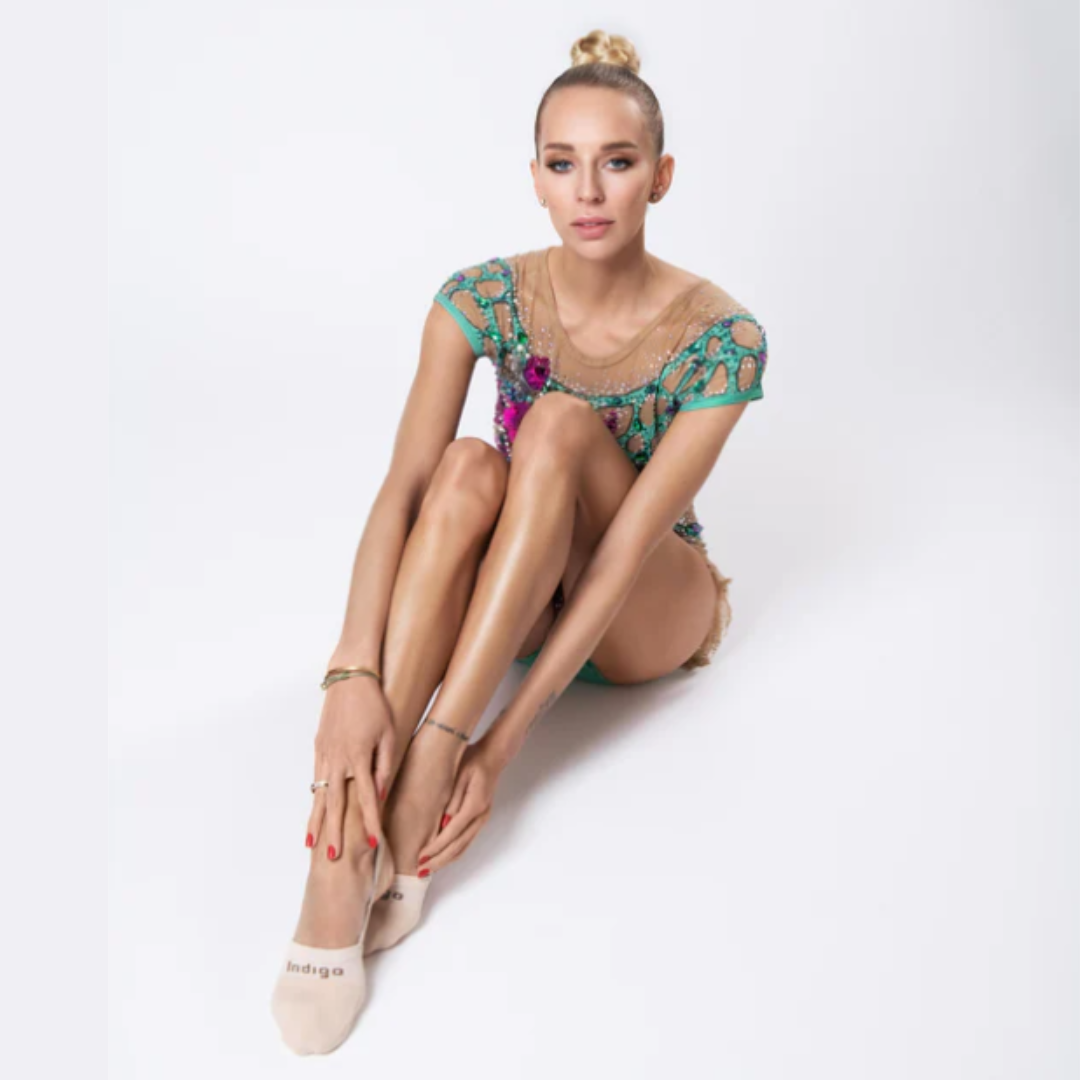
Indigo Sock-Style Toe Shoes
The most popular choice for training, thanks to its comfort and a fit similar to a "sock". It adapts to any foot shape.

INDIGO HELENA Toe Shoes
These toe shoes are made from microfibre, which is resistant to abrasion and wear. They feel pleasant against the skin and fit the foot very well.

SOLO Synthetic Leather Toe Shoes
These toe shoes are becoming a bestseller, especially among younger gymnasts, thanks to their softness and the absence of extra seams. Their unique half-shoe design sets them apart from other models, and they are also the most competitively priced option in the SOLO range.

SOLO Mixed Materials Toe Shoes
This model is ideal for pirouettes. It has a cotton lining and a flat seam that adds to the comfort.

SOLO Sealed Seam Toe Shoes
These toe shoes turn very well, and the underside has a reinforced section with foam padding to absorb impact when jumping. The elastic bands with silicone application keep the toe shoes secure on the leg.

SOLO Silver Toe Shoes
This model is unique because its fabric contains silver ions, which help prevent the growth and spread of bacteria and block unpleasant odours. It has a flat seam for great comfort and, as an extra, elastic bands with silicone that hold securely to the leg.

4. Puntillas, Puntas, Half Shoes: Are We Talking About the Same Thing?
If you've searched for "puntillas", "puntas" or "media punta" in rhythmic gymnastics, it's easy to get confused. In everyday use, each club, coach or family may use a different name, but it nearly always refers to the same accessory: a piece that covers the front of the foot to protect the sole and toes and help the gymnast turn on the floor.
What does change from one model to another is the design. Some only cover the ball of the foot, others look more like a short sock, and others have reinforcement on the underside. So rather than focusing on the name, it's worth checking three things on the product page:
- Which part of the foot it covers and how it stays on the foot or leg.
- The material of the sole and fabric, which affects grip and durability.
- The seams, especially if your gymnast has sensitive skin.
Once you're clear on these, comparing models becomes much easier.
5. Rhythmic Gymnastics Toe Shoes for Girls: What to Look For
When buying toe shoes for a young gymnast who is just starting out, the priority is that she can put them on herself and forget she's wearing them. A pair that pinches, creases or rubs will end up at the bottom of the bag, and then it protects nothing.
These practical tips will help you get it right:
- Always try them on calmly. Check that they aren't loose or forming creases under the toes, and that the toes can move freely.
- Look at the seams. Flat seams, or seams that are barely noticeable, reduce chafing, which matters for small feet that train often.
- Check the elastic bands if the model has them. They should hold the toe shoes in place without leaving marks or cutting off circulation.
- Think about the training routine. If she trains several days a week, having a spare pair makes it easier to wash and dry them without rushing.
Children's feet change quickly, so check the size with the model's size guide every time you replace them, and don't assume it will be the same as last time. If you'd like to see specific options, take a look at our SOLO rhythmic gymnastics toe shoes, which include designs for different types of training.
6. Sock-Style or Sole Toe Shoes: Which Suits You Best
This is one of the most common questions, and there isn't one single answer. It depends on how you train and what feeling you want under your foot.
| Type | What it offers | Best if… |
|---|---|---|
| Sock-style | Flexible fit, great comfort and easy to put on | You train every day, you're just starting out, or you want maximum freedom of movement |
| With sole or reinforcement | More support and greater resistance to friction | You do lots of turns and jumps and prefer your foot to feel more protected |
If you're unsure, start with a comfortable model and, over time, try another to compare how they feel. The best choice is the one the gymnast barely notices while practising.
And remember that toe shoes are part of a wider set of equipment. If you're packing for training sessions or competitions, this guide to what every gymnast should always pack will help.
7. Frequently Asked Questions
How do you care for and wash rhythmic gymnastics toe shoes?
It's important to clean your toe shoes regularly, both inside and out, to remove dirt and sweat that build up during use. It's best not to put them in the washing machine, as this can damage the materials. To make them last longer, the ideal approach is to wipe them with a damp cloth and let them air dry. It's also essential to store them in a cool, dry place, away from extreme temperatures.
Finally, as a preventive measure, we suggest using a protective case. This will help keep them clean for longer and reduce wear. As an option, here is this model of Indigo cases.

How often should they be replaced?
How long toe shoes last depends largely on how well they are cared for, but it's important to know when to replace them to avoid injury. Sock-style toe shoes tend to show signs of wear more quickly, but if you notice that your pair is worn out or no longer feels as comfortable as before, it's time to change them. On average, rhythmic gymnastics toe shoes last between 6 and 12 months.
8. Conclusion
Toe shoes for rhythmic gymnastics are an essential accessory for this discipline. Choosing a good-quality, comfortable product that suits each gymnast's needs can make a real difference to performance. Since every person is different, there are many options and models of toe shoes, and the most important thing is that the gymnast feels comfortable and confident with their choice.
Looking for toe shoes for your training? Discover our rhythmic gymnastics toe shoe collection

